
Two SaaS products can have almost identical dashboards, subscription plans, and user interfaces while costing dramatically different amounts to develop. One might be a straightforward scheduling platform serving small businesses. The other may need multiple customer workspaces, complex permissions, automated billing, enterprise integrations, real-time reporting, and strict data isolation.
The visible application represents only part of the investment. Behind it are engineering decisions that determine how securely the product operates, how easily it can evolve, and how much it costs to serve each additional customer. Understanding SaaS development cost in 2026 therefore requires more than comparing hourly developer rates or requesting a price for a list of features.
Founders need to estimate the cost of building the product, bringing it into production, supporting customers, and maintaining the platform as usage grows. This guide provides practical SaaS development budget ranges, detailed engineering estimates, feature-level pricing, architectural considerations, AI integration costs, and worked financial examples to help businesses plan a realistic investment before committing to development.
Quick Answer: How Much Does SaaS Development Cost?
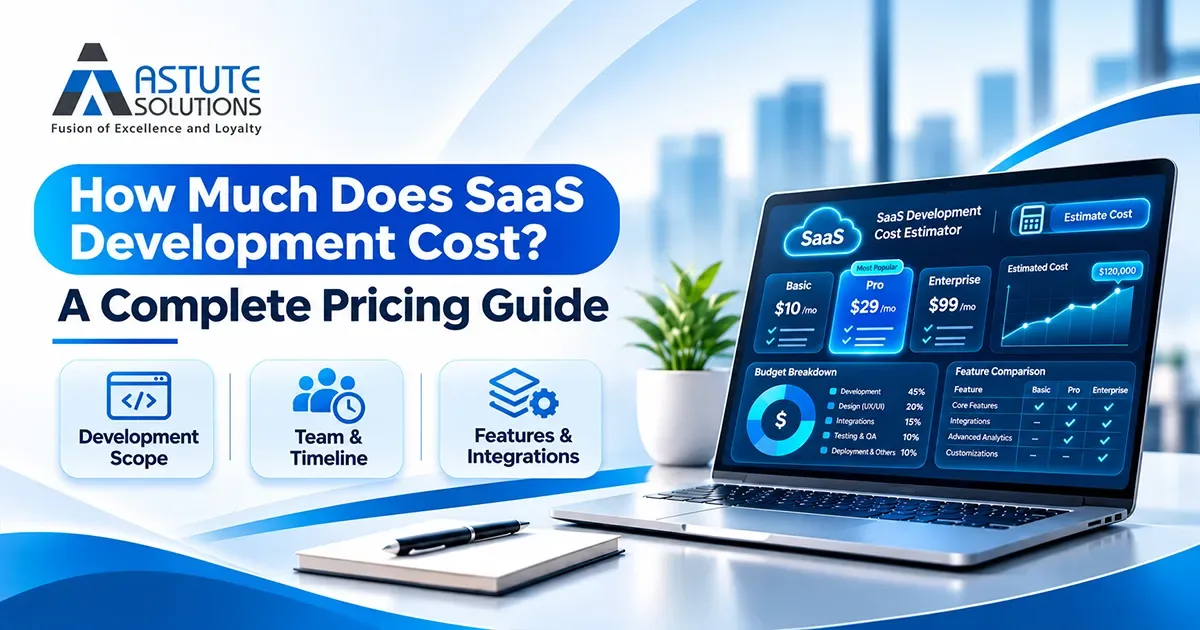
A custom SaaS product can require an initial development budget of approximately $15,000 to $500,000 or more in 2026, depending on its scope, engineering complexity, development team, security requirements, and deployment architecture.
- Lean SaaS MVP: $15,000–$45,000.
- Commercial SaaS MVP: $45,000–$90,000.
- Growth-ready SaaS platform: $90,000–$200,000.
- Advanced or enterprise SaaS: $200,000–$500,000+.
These are illustrative planning ranges, not a universal industry average or fixed development quotation. Businesses should also allocate a separate post-launch budget for hosting, monitoring, technical maintenance, customer support, third-party services, and ongoing product improvements. The most reliable way to estimate SaaS development cost is to multiply the expected delivery effort by the team's blended hourly rate, then account for contingency, external services, and post-launch operating expenses.
Key Takeaways
- Product complexity matters more than the number of screens. Permissions, billing rules, integrations, and data processing frequently account for substantial engineering effort.
- A production-ready MVP is different from a prototype. It must be reliable enough for real customers, with appropriate security, monitoring, and recovery mechanisms.
- Development cost is only the first part of SaaS ownership. Infrastructure, maintenance, support, payment processing, and future product development require separate funding.
- Hourly rates do not determine total project value. An experienced team may complete a well-defined scope more efficiently than a less expensive but poorly coordinated team.
- Multi-tenancy affects both development and operating costs. Tenant isolation, provisioning, permissions, and customer-level monitoring should be considered early.
- AI-powered SaaS introduces recurring usage costs. Model inference, evaluations, retrieval, monitoring, and human review may affect profitability.
- Budget decisions should reflect product economics. Founders should estimate customer acquisition, contribution margins, runway, and break-even requirements alongside development expenses.
- Start with a measurable commercial objective. A smaller product that solves a valuable customer problem is often a better investment than a larger platform with unvalidated features.
What Does the Software Development Market Tell Us About SaaS Pricing?
Published software development pricing reports provide useful starting points, but they should not be treated as exact SaaS development quotations. The 2026 Clutch Software Development Pricing Guide reports that reviewed custom software projects commonly fall within the $10,000–$49,999 range. Its reported mean project value is approximately $132,480, reflecting the wider distribution of software projects.
These figures cover custom software development generally, rather than SaaS products exclusively. A multi-tenant subscription platform may require functionality that a conventional internal business application does not, including subscription management, tenant provisioning, customer-level permissions, usage tracking, and ongoing commercial operations.
Published SaaS development guides also differ considerably. Some providers focus on narrowly scoped MVPs delivered by distributed development teams, while others estimate larger enterprise platforms with more demanding integration and security requirements.
SaaS Development Cost by Product Complexity
One of the most useful ways to estimate a SaaS development budget is to determine the level of product maturity required at launch. A founder testing a single workflow does not need the same engineering investment as a company selling software to enterprises with complex procurement and security requirements.
| Product Type | Estimated Build Cost | Indicative Timeline | Typical Scope |
|---|---|---|---|
| Lean MVP | $15,000–$45,000 | 2–4 months | One core workflow, basic onboarding, managed authentication and limited integrations |
| Commercial MVP | $45,000–$90,000 | 3–6 months | Customer workspaces, billing, permissions, administration and operational monitoring |
| Growth-Ready SaaS | $90,000–$200,000 | 5–10 months | Multiple workflows, advanced reporting, integrations and scalable architecture |
| Enterprise SaaS | $200,000–$500,000+ | 8–18+ months | Enterprise identity, auditability, complex integrations, performance and security requirements |
Actual schedules depend on team capacity, dependencies, review cycles, integration access, and the extent to which activities can run in parallel. Larger or regulated platforms may exceed these estimates considerably.
1. Lean SaaS MVP: $15,000–$45,000
A lean minimum viable product is designed to validate whether customers will use and potentially pay for a particular software capability. For example, a startup developing appointment management software might initially support one customer category, a simple booking workflow, account registration, calendar management, and basic notifications.
Features such as complex reporting, native mobile applications, white-label customization, and integrations with several accounting platforms can be deferred. However, the MVP should still protect customer data, enforce appropriate access controls, and provide basic operational reliability.
The lower end of this budget is most realistic when requirements are narrow, established components can be reused, and the team does not need to solve significant integration or architectural uncertainty.
2. Commercial SaaS MVP: $45,000–$90,000
A commercial MVP goes beyond validating an interface or demonstrating a technical concept. It allows real customers to register, subscribe, use the product, and receive support. Typical functionality may include customer organizations, role-based permissions, recurring payments, trial management, an administrative dashboard, transactional notifications, and basic reporting.
The additional investment is not simply for more features. It is also for handling the operational conditions that emerge when customers depend on the product. For instance, subscription cancellation should correctly update access permissions. Failed payments should follow an established recovery process. Administrative support should not accidentally expose another customer's information.
3. Growth-Ready SaaS Platform: $90,000–$200,000
A growth-ready product supports broader customer requirements and is designed to evolve without repeatedly rebuilding its foundations. It may include configurable workflows, advanced analytics, additional integrations, granular permissions, background processing, improved observability, and customer-level usage controls.
At this stage, the architecture must accommodate changing workloads, growing datasets, more frequent releases, and a wider variety of customer configurations.
Businesses with validated product requirements can use SaaS and custom software development services to plan these capabilities around their actual customer needs instead of adopting unnecessary architectural complexity.
4. Enterprise SaaS Platform: $200,000–$500,000+
Enterprise SaaS development typically involves more demanding technical and commercial requirements. Customers may request single sign-on, identity provisioning, detailed audit logs, contractual availability commitments, regional data hosting, advanced security controls, and integrations with established enterprise systems.
Enterprise readiness also extends beyond the application itself. Security documentation, incident response procedures, access reviews, backup recovery testing, and operational support may become part of the vendor's commercial responsibilities.
A technically functional product does not automatically satisfy these requirements. They must be identified during discovery and reflected in both the initial development budget and ongoing operating model.
How to Calculate SaaS Development Cost
Rather than starting with an arbitrary project budget, businesses can construct an estimate around the expected work required to deliver the product.
Delivery hours should include discovery, architecture, design, engineering, testing, deployment, and project coordination rather than development time alone.
The blended hourly rate represents the effective cost across the roles involved in delivery. If developers, designers, architects, and testers have different rates, calculate the cost of each role separately or derive a weighted average.
Worked Example: A B2B SaaS MVP
Consider a subscription-based B2B platform that helps service businesses manage customer requests, assign work, track progress, and generate basic reports.
The product includes organization accounts, three user roles, recurring billing, email notifications, customer administration, and one standard external integration. For this planning scenario, assume a blended delivery rate of $40 per hour.
| Development Activity | Estimated Hours | Estimated Cost |
|---|---|---|
| Product discovery and requirements | 80 | $3,200 |
| UI/UX design | 120 | $4,800 |
| Architecture and data modeling | 100 | $4,000 |
| Frontend development | 260 | $10,400 |
| Backend development | 320 | $12,800 |
| Billing and integrations | 120 | $4,800 |
| QA and security testing | 160 | $6,400 |
| DevOps and production deployment | 80 | $3,200 |
| Project coordination | 100 | $4,000 |
| Total Delivery Estimate | 1,340 hours | $53,600 |
| 15% contingency | — | $8,040 |
| One-time external setup expenses | — | $2,000 |
| Total Planned Launch Budget | — | $63,640 |
This model provides a clearer planning foundation than receiving a single price without an explanation of the work included. The estimate remains sensitive to product requirements. Adding enterprise identity management, complex customer migrations, native mobile applications, or advanced reporting could materially increase the required effort.
The 15% contingency is an assumption for this example. Projects with unresolved integrations, legacy data, unfamiliar technology, or regulatory uncertainty may require a larger reserve.
SaaS Development Cost per Feature
Feature-level estimation helps founders identify where their budget is going and which capabilities should be prioritized for launch. The following ranges assume a blended delivery rate of $40 per hour and show illustrative effort for implementing and validating individual capabilities.
| SaaS Feature | Estimated Hours | Estimated Cost | Main Complexity Driver |
|---|---|---|---|
| Registration and authentication | 40–100 | $1,600–$4,000 | Identity flows and account recovery |
| Customer onboarding | 40–100 | $1,600–$4,000 | Workspace setup and onboarding rules |
| Role-based access control | 60–160 | $2,400–$6,400 | Permission combinations and enforcement |
| Multi-tenant architecture | 120–300 | $4,800–$12,000 | Isolation, provisioning and testing |
| Subscription billing | 80–200 | $3,200–$8,000 | Plans, upgrades, cancellations and webhooks |
| Administrative dashboard | 60–180 | $2,400–$7,200 | Support controls and administrative workflows |
| Notifications | 30–100 | $1,200–$4,000 | Channels, templates and delivery handling |
| Reports and analytics | 100–300 | $4,000–$12,000 | Metrics, filters and data aggregation |
| External API integration | 40–160 | $1,600–$6,400 | Per standard integration, depending on API quality |
| Audit logging | 50–150 | $2,000–$6,000 | Events, retention and access policies |
| Enterprise SSO | 60–180 | $2,400–$7,200 | Identity provider support and tenant configuration |
| Real-time collaboration | 150–400 | $6,000–$16,000 | Synchronization and conflict resolution |
| AI-powered feature | 100–350 | $4,000–$14,000 | Model integration, evaluation and safeguards |
| Controlled AI agent workflow | 250–700 | $10,000–$28,000 | Tool execution, permissions and recovery |
Why a Feature Name Is Not Enough to Estimate Its Cost
Consider a requirement described as customer reporting. A basic implementation might display five predefined metrics from a single database. A more advanced implementation could support configurable dashboards, historical comparisons, scheduled exports, multiple data sources, and different permissions for every report.
Both are described as reporting, but their development requirements are substantially different. Before estimating a feature, define who uses it, what information it processes, how frequently it runs, which edge cases must be handled, and what constitutes successful completion.
12 Factors That Influence SaaS Development Cost
1. Product Scope and Business Logic
Every additional business workflow introduces requirements beyond its visible interface. A simple invoicing capability might require creating and displaying invoices. A more sophisticated implementation may include tax rules, recurring charges, partial payments, credit notes, approval thresholds, and accounting synchronization. The number of rules, exceptions, and dependencies often provides a better indication of engineering complexity than the number of screens.
2. UI/UX Design Complexity
SaaS design becomes more demanding as the number of user roles, workflows, and product configurations increases. A dashboard designed for a business owner may display information and actions that should not be available to an employee or external customer.
Effective design should account for these differences, including empty states, loading states, validation errors, accessibility, and responsive behavior. Reducing unnecessary visual complexity can save development time. Removing essential workflow design, however, frequently transfers the cost into engineering rework and customer support.
3. Multi-Tenancy and Customer Isolation
Multi-tenancy allows a SaaS platform to serve multiple customer organizations while maintaining appropriate boundaries between their information and resources. Engineering requirements include tenant identification, membership management, authorization, data partitioning, provisioning, and protection against cross-tenant access.
These controls must operate consistently across APIs, background jobs, exports, search indexes, and administrative operations. Adding tenant isolation after a product has already been built around a single-customer data model may require substantial architectural changes.
4. Subscription Billing and Revenue Logic
Integrating a payment provider is only one component of SaaS billing. The product must also understand which capabilities each customer has purchased, when access begins or ends, how failed payments are handled, and what happens during upgrades or downgrades.
Usage-based billing adds further complexity because the platform must accurately measure billable activity and reconcile that information with customer invoices. Managed billing providers can reduce implementation effort, but their fees and operational requirements must be included in the financial model. Businesses can review current Stripe Billing pricing as one example of how recurring billing services are charged.
5. Third-Party Integrations
Integrations with CRMs, accounting systems, communication tools, payment providers, and enterprise platforms may significantly affect development cost. A documented API with a reliable testing environment is generally easier to integrate than an older system with inconsistent records, limited documentation, and restrictive access.
Production integrations also require authentication management, error handling, synchronization logic, rate-limit management, and monitoring. For example, sending an invoice to an accounting system is straightforward only when both systems agree on customer identifiers, currencies, tax treatment, and payment status.
6. Technology Stack
The technology stack influences development productivity, available engineering expertise, deployment requirements, maintenance effort, and future extensibility. A well-understood framework and managed database may be more economical than introducing several specialized technologies before the product has demonstrated a need for them.
Open-source software can reduce licensing expenses, but it still requires implementation, security updates, integration, and ongoing ownership. Technology choices should reflect product requirements and team expertise rather than the popularity of a particular framework.
7. Performance and Scalability Requirements
A SaaS product serving hundreds of users with occasional requests has different infrastructure needs from a platform processing continuous data streams or large volumes of transactions. Scalability requirements may introduce background processing, caching, database optimization, load testing, queue management, and additional infrastructure.
Instead of designing for an arbitrary number of registered users, estimate concurrent activity, request frequency, data volume, transaction complexity, and customer growth patterns.
8. Security and Compliance
Security requirements affect architecture, development processes, testing, and ongoing operations. A typical SaaS product needs appropriate access controls, secure authentication, encrypted communication, dependency management, backup procedures, and operational logging.
Products handling sensitive financial, healthcare, or enterprise information may require additional technical and organizational safeguards. Applicable legal requirements and independent assurance processes should be assessed separately. A software feature or cloud certification does not automatically make the entire SaaS business compliant.
9. Mobile Application Requirements
A responsive web application may be sufficient for the first version of many B2B SaaS products. Native or cross-platform mobile applications can introduce additional work involving device-specific behavior, application store releases, push notifications, offline storage, synchronization, and mobile testing.
If mobile access is important to the product's commercial value, businesses should assess these requirements through web and mobile application development planning rather than assume the mobile interface can be added without significant effort.
10. AI and Intelligent Automation
AI capabilities range from relatively simple content generation to complex systems that retrieve information, use tools, and coordinate actions across connected applications. Development costs depend on the required accuracy, model selection, data preparation, integration complexity, evaluation requirements, and consequences of incorrect outputs. AI can also create variable operating expenses that increase with customer activity.
11. Development Team and Delivery Model
Team composition affects the overall budget through engineering rates, coordination overhead, technical leadership, and delivery efficiency. A lower hourly rate does not guarantee a lower total cost if the project requires more supervision, repeated corrections, or substantial architectural rework. Businesses should evaluate the proposed team, its experience with similar requirements, and the deliverables included in the estimate.
12. Quality Assurance and Release Readiness
Testing a SaaS product involves more than checking whether individual buttons and forms work. Production readiness includes verifying permissions, subscription behavior, integration failures, data recovery, performance, and the safety of future releases. Reducing testing investment may make the initial quotation appear attractive while increasing the risk of customer-facing defects and expensive post-launch corrections.
How SaaS Architecture Affects Development and Operating Costs
Architecture determines how a SaaS product stores information, processes requests, isolates customers, and distributes infrastructure resources. These decisions influence both the initial implementation effort and the cost of serving customers over time. The AWS SaaS architecture guidance describes several approaches to sharing and isolating resources across tenants.
| Architecture Model | How It Works | Cost Implications | Potential Fit |
|---|---|---|---|
| Pooled | Multiple tenants share infrastructure with enforced logical isolation | Potentially efficient infrastructure utilization; requires careful isolation engineering | Many standardized B2B SaaS products |
| Siloed | Selected resources or complete environments are dedicated to individual tenants | Higher potential resource and provisioning overhead | Customers with stronger isolation requirements |
| Bridge or Hybrid | Combines shared and dedicated resources | Can balance customer requirements and resource costs; introduces operational complexity | Products serving multiple customer tiers |
Modular Monolith vs Microservices
A modular monolith organizes the application into clearly separated functional modules while retaining a relatively unified deployment model. For an early-stage SaaS product, this can simplify development, testing, deployment, and troubleshooting.
Microservices allow different capabilities to be deployed and scaled independently, but they introduce distributed communication, service coordination, more complex monitoring, and additional operational responsibilities. A startup does not necessarily need microservices to build a scalable product. Independent services may become appropriate when specific workloads, organizational boundaries, or reliability requirements justify them.
Example: The Cost of Premature Architectural Complexity
Suppose a SaaS MVP can be delivered using a modular application with a managed database and a background job service. If the team instead introduces several independently deployed services, an API gateway, container orchestration, and distributed event processing without a validated requirement, additional engineering and operational work may be necessary.
Assuming this architectural expansion requires 200 additional hours at $40 per hour, it adds $8,000 to the initial development estimate before recurring infrastructure expenses. The figure is illustrative, but the decision principle is important: architecture should solve identified product requirements rather than create complexity in anticipation of hypothetical scale.
SaaS Development Cost by Country and Team Location
Development team location can affect hourly rates, but comparisons should use equivalent scopes and delivery responsibilities. The following table combines selected country-level rate bands reported in Clutch's 2026 software development pricing guide with a standardized calculation for a 1,000-hour project.
| Development Location | Published Hourly Rate Band | Illustrative 1,000-Hour Cost |
|---|---|---|
| United States | $50–$99 | $50,000–$99,000 |
| Canada | $100–$149 | $100,000–$149,000 |
| Australia | $100–$149 | $100,000–$149,000 |
| Poland | $50–$99 | $50,000–$99,000 |
| Ukraine | $25–$49 | $25,000–$49,000 |
| India | $25–$49 | $25,000–$49,000 |
| Philippines | $25–$49 | $25,000–$49,000 |
| Mexico | $25–$49 | $25,000–$49,000 |
Source: Clutch Software Development Company Pricing Guide 2026. The underlying rates relate to general software development companies listed on Clutch. The 1,000-hour totals are calculated examples, not published SaaS project averages.
These figures do not establish the cost of hiring an individual developer in each country. Specialized engineers, enterprise vendors, and different engagement arrangements may have considerably different pricing.
Why the Lowest Hourly Rate May Not Produce the Lowest Project Cost
Imagine two development teams estimating the same product. Team A charges $30 per hour and estimates 1,800 hours of work. Its development estimate is $54,000. Team B charges $45 per hour but estimates 1,100 hours, resulting in a development estimate of $49,500.
The second team has a higher hourly rate but a lower projected delivery cost. However, these estimates are comparable only if both teams include equivalent requirements, testing, project management, documentation, and production readiness.
Organizations requiring ongoing engineering capacity may also consider dedicated AI-augmented software development teams, particularly when the product roadmap is expected to evolve through regular releases.
In-House vs Freelance vs Outsourced SaaS Development
The appropriate development model depends on how much technical control the business requires, how quickly it needs to assemble a team, and whether engineering will remain a permanent internal function.
| Delivery Model | Main Advantages | Costs and Trade-Offs |
|---|---|---|
| In-house development | Direct control and internal product knowledge | Recruitment, salaries, benefits, management and ongoing capacity costs |
| Freelancers | Flexible access to individual specialists | Coordination, availability, continuity and technical oversight |
| Development agency | Access to multiple disciplines through an organized delivery arrangement | Vendor management, contract scope and quality of handover |
| Dedicated development team | Consistent engineering capacity for an evolving roadmap | Recurring team commitment and product ownership responsibilities |
| Hybrid team | Combines internal leadership with external engineering specialists | Coordination and clear ownership boundaries are essential |
Fixed-Price Development
A fixed-price engagement can work well when product requirements, deliverables, dependencies, and acceptance criteria are sufficiently defined. The contract should explain how new requirements are handled, what qualifies as a defect, and which integrations or external costs are excluded.
Time and Materials
Time-and-materials arrangements provide more flexibility when requirements are expected to evolve. They require transparent reporting, regular prioritization, budget monitoring, and active product ownership to prevent uncontrolled spending.
Dedicated Team Engagement
A dedicated team may be appropriate when SaaS development is an ongoing activity rather than a single project with a fixed endpoint.
Businesses comparing these arrangements can review Astute Solutions' software development engagement models to understand how product discovery, fixed-scope development, dedicated teams, and continuous development address different requirements.
Custom SaaS vs No-Code vs White-Label Development Cost
Not every SaaS business needs to build its entire product from scratch. Available alternatives include no-code platforms, low-code tools, white-label products, reusable software foundations, and custom development.
| Development Approach | Indicative Initial Budget | Potential Limitations |
|---|---|---|
| Self-built no-code prototype | $0–$5,000, excluding founder time | Platform capabilities, usage fees and technical constraints |
| Professional no-code or low-code build | $5,000–$25,000+ | Platform-specific dependencies and customization limits |
| White-label SaaS | $5,000–$30,000+ | Vendor licensing, differentiation and ownership restrictions |
| Custom SaaS MVP | $15,000–$90,000 | Higher engineering investment and ongoing maintenance |
| Growth-ready custom platform | $90,000–$200,000+ | Greater product, engineering and operational responsibilities |
These illustrative ranges depend on scope and licensing arrangements. Subscription fees and ongoing support are not included. No-code can be useful for validating demand, creating prototypes, or delivering workflows that closely match the platform's capabilities.
Custom development becomes more attractive when the product requires distinctive business logic, deeper integrations, specialized data handling, or greater control over its technical direction.
There is no universal user-count threshold at which every no-code product must be rebuilt. Migration decisions should be based on measured performance, economics, product limitations, and future requirements.
How Much Does AI-Powered SaaS Development Cost?
AI-powered SaaS development requires businesses to estimate both conventional software engineering costs and the additional expenses associated with AI capabilities. An application that generates a short text summary is fundamentally different from an agentic platform that analyzes customer information, interacts with multiple systems, and executes controlled business actions.
| AI Capability | Illustrative Additional Build Cost | Main Requirements |
|---|---|---|
| Basic generative AI feature | $3,000–$12,000 | API integration, prompts, validation and usage controls |
| Knowledge-based AI assistant | $8,000–$30,000 | Document retrieval, permissions, indexing and evaluations |
| Intelligent document processing | $10,000–$40,000 | Extraction, validation and exception handling |
| Controlled agentic AI workflow | $10,000–$50,000+ | Tool integrations, orchestration, approvals and recovery |
| Specialized machine learning system | $30,000–$150,000+ | Data preparation, experimentation, deployment and monitoring |
These are additional capability budgets for different levels of AI implementation. They are not complete product quotations and should not be added indiscriminately to estimates covering the same work.
Businesses developing intelligent product capabilities can evaluate the required architecture through AI systems and automation development, particularly when the workflow involves business records, external tools, or actions requiring authorization.
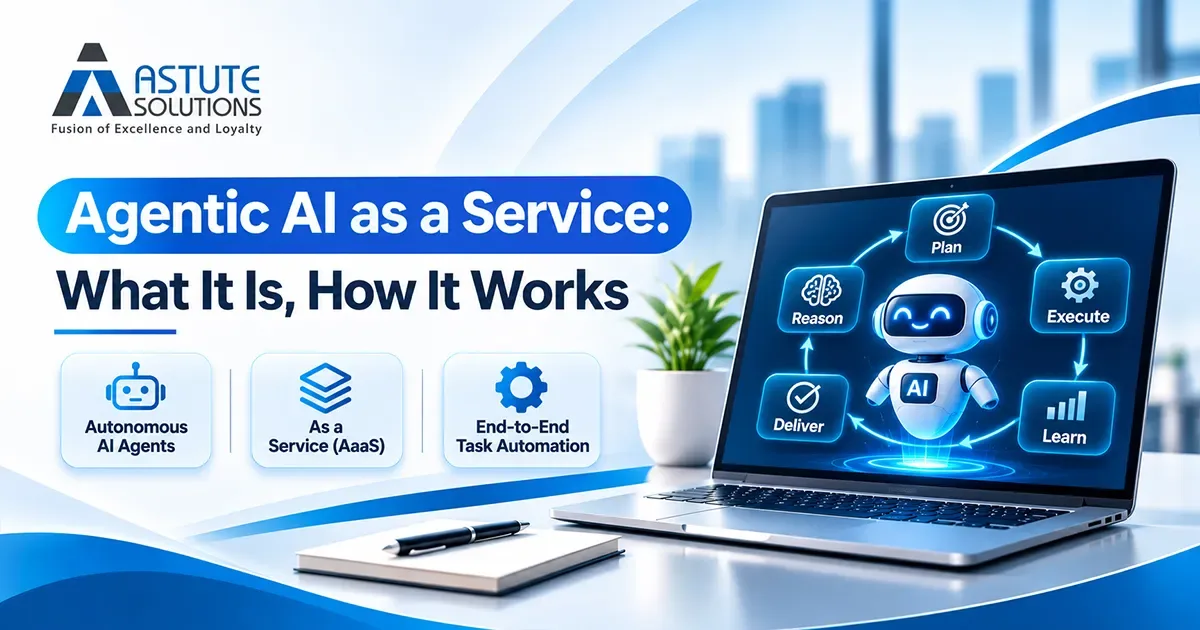
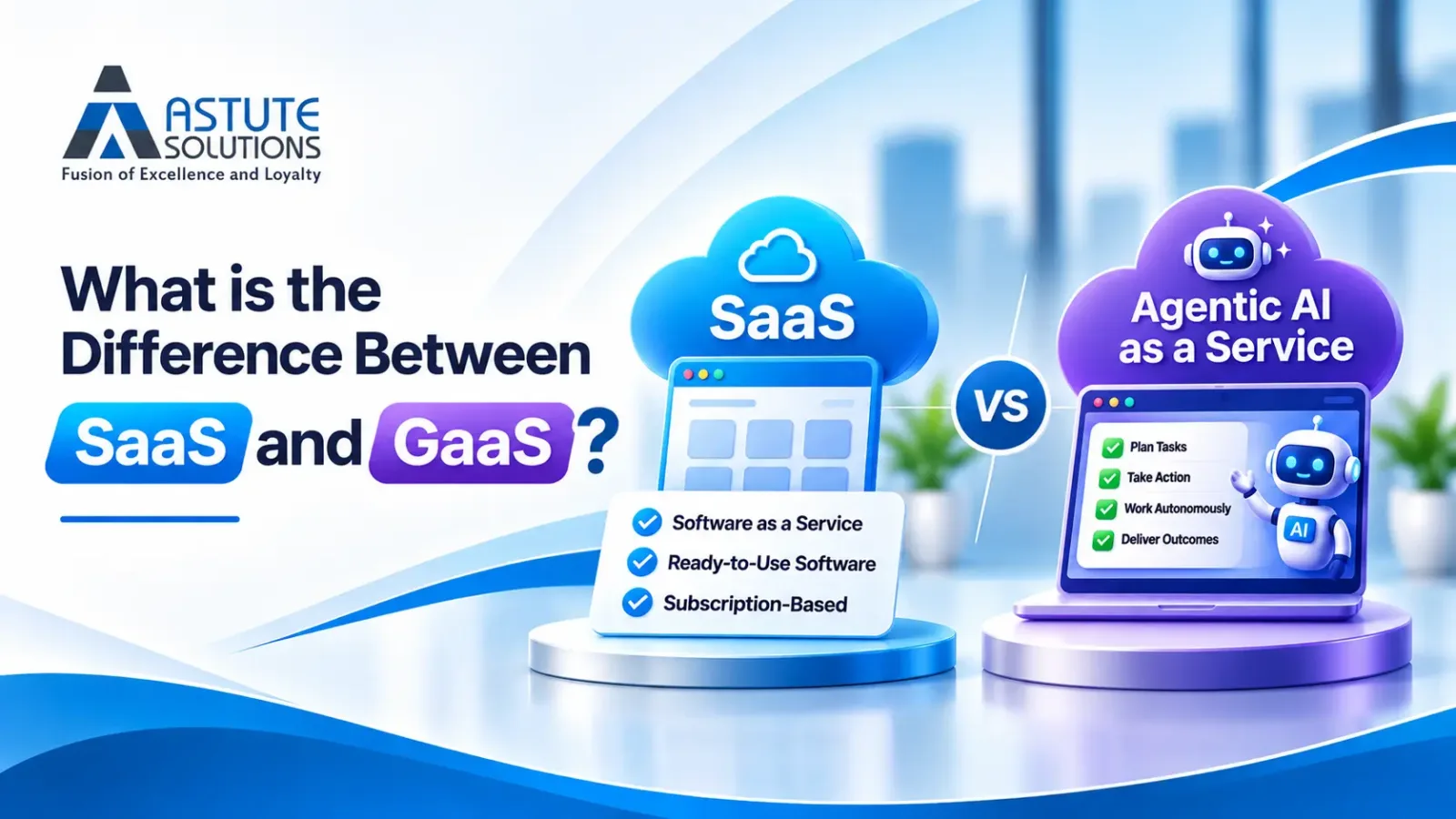
For more detail about goal-directed AI workflows, read our guide to Agentic AI as a Service. Our comparison of SaaS vs GaaS also explains how traditional application software and agentic services can work together.
Calculating Monthly AI Inference Costs
AI inference cost depends on the selected model, input and output volume, caching, tool usage, and the number of requests required to complete a task.
Assume a SaaS platform processes 100,000 AI requests per month. Each request consumes an average of 2,000 input tokens and 500 output tokens. For illustration, assume a model costs $1 per million input tokens and $4 per million output tokens.
- Monthly input volume: 200 million tokens.
- Monthly output volume: 50 million tokens.
- Estimated input cost: $200.
- Estimated output cost: $200.
- Total illustrative token cost: $400 per month.
This calculation excludes retrieval infrastructure, external tools, retries, monitoring, additional model calls, and human review. The example uses hypothetical model rates. Consult the current provider's official pricing documentation, such as OpenAI API pricing, before creating a commercial forecast.
Why AI Usage Limits Matter for SaaS Profitability
Suppose customers pay a fixed monthly subscription while the product incurs variable AI costs. A small number of customers generating exceptionally large volumes of requests may consume a disproportionate share of the service's operating budget.
Customer-level usage tracking, fair-use policies, model routing, spending limits, and appropriate subscription tiers can help manage this risk. AI functionality should therefore be designed alongside the product's revenue model rather than treated as an isolated engineering feature.
Hidden SaaS Development Costs Founders Often Overlook
1. Customer Data Migration
New customers may already have important information stored in spreadsheets, older applications, or competing software platforms. Importing that information requires mapping, validation, duplicate detection, error reporting, and sometimes manual correction.
A repeatable migration workflow can become especially important for B2B products targeting customers with established operational systems.
2. Billing Exceptions
Subscription businesses encounter failed payments, refunds, upgrades, downgrades, cancellations, discounts, and plan changes. If these conditions are not included in the original scope, they may become expensive corrections after the product begins accepting payments.
3. Staging and Development Environments
Production infrastructure is not the only environment that needs funding. Development and staging environments support testing, integration validation, release preparation, and troubleshooting without unnecessarily risking customer operations.
4. Customer Support and Administrative Tools
Customer-facing features alone are insufficient for operating a commercial SaaS business. Support teams may need controlled account access, subscription visibility, audit information, diagnostic tools, and safe procedures for resolving customer problems.
5. Security Reviews and Independent Assessments
Depending on the product and its customers, the business may need external penetration testing, legal advice, security questionnaires, independent assurance, and compliance-related documentation. These costs should be evaluated separately instead of assuming they are covered by standard development activities.
6. Integration Maintenance
External providers change APIs, authentication requirements, rate limits, and commercial terms. Integrations that work at launch may need ongoing adjustments to remain dependable.
7. Backup Restoration and Disaster Recovery
Creating database backups is not sufficient if the team cannot successfully restore them when needed. Recovery procedures, restoration testing, retention policies, and incident preparation introduce recurring engineering and infrastructure responsibilities.
8. Technical Debt and Product Rework
Some shortcuts are appropriate during early experimentation. Others create structural limitations that make future development unnecessarily expensive. Teams should explicitly document temporary technical decisions, assess their consequences, and allocate effort for improvements when the product begins to grow.
9. Product Ownership and Roadmap Management
Someone must decide which features matter, validate customer feedback, resolve competing requirements, and approve changes. Even when development is outsourced, these responsibilities do not disappear. Founder time, product management, and technical oversight belong in the broader business investment model.
Monthly SaaS Maintenance and Operating Costs
Launching a SaaS application creates an ongoing commitment to operate, support, and improve the service. Recurring expenses vary with customer activity, infrastructure design, support requirements, third-party pricing, and the pace of product development. The following is an illustrative technical operating budget for an early commercial SaaS platform.
| Operating Expense | Illustrative Monthly Budget | What It Covers |
|---|---|---|
| Cloud application infrastructure | $150–$600 | Application hosting, networking and compute |
| Database and storage | $100–$400 | Data storage, database services and backups |
| Monitoring and logging | $50–$200 | Error tracking, operational visibility and alerts |
| Third-party services | $100–$400 | Email, authentication and external tools |
| Engineering maintenance | $800–$2,400 | 20–60 hours at $40 per hour |
| Customer technical support | $300–$1,000 | Technical investigation and operational assistance |
| Total Illustrative Monthly Cost | $1,500–$5,000 | Early-stage technical operating scenario |
This example excludes transaction-dependent payment fees, AI inference, major feature development, marketing, sales, taxes, and specialized compliance expenses.
Even modest hosting costs should not be interpreted as evidence that an entire SaaS business is inexpensive to operate. Engineering maintenance and customer support can represent a much larger share of the budget than cloud infrastructure.
What Is the Total First-Year Cost of Building and Running a SaaS Product?
A common budgeting mistake is treating the development quotation as the complete investment required to launch a SaaS business. The product needs funding for both development and the period after launch, when revenue may still be developing. Using the commercial MVP example calculated earlier, assume a four-month development period followed by eight months of commercial operation within the first year.
| Budget Component | Calculation | First-Year Cost |
|---|---|---|
| Product development | 1,340 hours × $40 | $53,600 |
| Development contingency | 15% of delivery cost | $8,040 |
| One-time external expenses | Planning allowance | $2,000 |
| Post-launch technical operations | 8 months × $2,500 | $20,000 |
| Additional product improvements | 8 months × $1,500 | $12,000 |
| Sales and marketing allocation | 8 months × $2,000 | $16,000 |
| Total First-Year Planned Investment | — | $111,640 |
The first-year planned investment is approximately $111,640, even though the initial software delivery estimate is $53,600. The model assumes development-period infrastructure and delivery coordination are covered by the initial estimate and one-time allowance. It excludes founder compensation, taxes, financing expenses, transaction-dependent fees, and other business-specific overhead.
Separating these categories allows founders to assess whether they have enough funding to operate the product while working toward sustainable revenue.
How Scope Changes Affect SaaS Development Budgets
Early estimates inevitably contain uncertainty. Rather than relying on a single figure, businesses should understand how changes in effort and rates affect the budget. The following table uses the same 1,340-hour commercial MVP estimate and compares three scenarios.
| Scenario | Delivery Hours | Blended Rate | Delivery Cost |
|---|---|---|---|
| Reduced scope | 1,072 | $40/hour | $42,880 |
| Baseline | 1,340 | $40/hour | $53,600 |
| Expanded scope | 1,608 | $40/hour | $64,320 |
| Expanded scope and higher rate | 1,608 | $50/hour | $80,400 |
A 20% increase in delivery hours combined with a 25% increase in the blended rate raises the development cost by 50% compared with the baseline.
These figures exclude contingency and external expenses. The purpose is to illustrate how scope and rate changes interact rather than predict a particular project's final price.
How Many Paying Customers Does a SaaS Product Need to Break Even?
Development planning should be connected to the product's commercial model. Understanding how much it costs to build the software is important, but founders must also understand whether subscription revenue can support ongoing expenses.
Monthly Contribution per Customer = Monthly Subscription Revenue − Variable Cost per Customer
Operating Break-Even Customers = Fixed Monthly Operating Expenses ÷ Monthly Contribution per Customer
Consider a B2B SaaS business charging $49 per customer organization each month. Assume the variable cost of serving each organization is $9 per month, including incremental infrastructure, payment processing, and usage-related services.
Each customer therefore contributes $40 toward fixed expenses. If the company has $4,000 in monthly fixed operating expenses, it needs 100 paying customer organizations to reach monthly operating break-even under these assumptions.
| Paying Customers | Monthly Revenue | Total Monthly Operating Cost | Operating Result |
|---|---|---|---|
| 50 | $2,450 | $4,450 | -$2,000 |
| 100 | $4,900 | $4,900 | $0 |
| 200 | $9,800 | $5,800 | +$4,000 |
| 500 | $24,500 | $8,500 | +$16,000 |
Operating break-even does not mean the original development investment has been recovered. If the business reaches 200 paying customers and maintains a monthly operating surplus of $4,000, recovering the illustrative $63,640 launch investment would require approximately 16 additional months at that constant surplus.
This simplified scenario excludes losses incurred before reaching break-even, customer churn, taxes, financing costs, new capital investment, and changes in operating expenses.
Why Customer-Level Economics Should Influence Development Decisions
Suppose an AI capability increases the variable cost per customer from $9 to $19 without increasing subscription revenue. The contribution per customer falls from $40 to $30. At $4,000 in fixed monthly expenses, the business would now require 134 customers rather than 100 to reach operating break-even.
Understanding these relationships helps founders decide whether new features should be included in the existing subscription, limited by usage, or offered through a higher-priced plan.
How Long Does SaaS Development Take?
Delivery timelines depend on scope, engineering capacity, technical dependencies, and the speed at which decisions can be made. A straightforward MVP may be delivered within a few months, while enterprise products can require considerably longer periods of design, development, integration, and validation.
The following roadmap illustrates how a 16-week commercial MVP project might be organized, assuming a suitably staffed team and reasonably stable requirements.
| Timeline | Primary Activities | Expected Deliverable |
|---|---|---|
| Weeks 1–2 | Discovery, requirements and scope prioritization | Approved product requirements and delivery plan |
| Weeks 2–5 | Design, architecture and technical preparation | Validated workflows and technical foundations |
| Weeks 4–11 | Core application engineering | Working product capabilities |
| Weeks 7–13 | Billing, integrations and continuous testing | Connected and tested business workflows |
| Weeks 12–15 | Acceptance testing, security review and stabilization | Validated release candidate |
| Week 16 | Production launch and operational handover | Production deployment and support procedures |
Activities overlap intentionally. The roadmap is a planning example rather than a guaranteed delivery schedule. Development acceleration can be valuable when it reduces repetitive engineering work without removing architectural reviews, testing, or production safeguards.
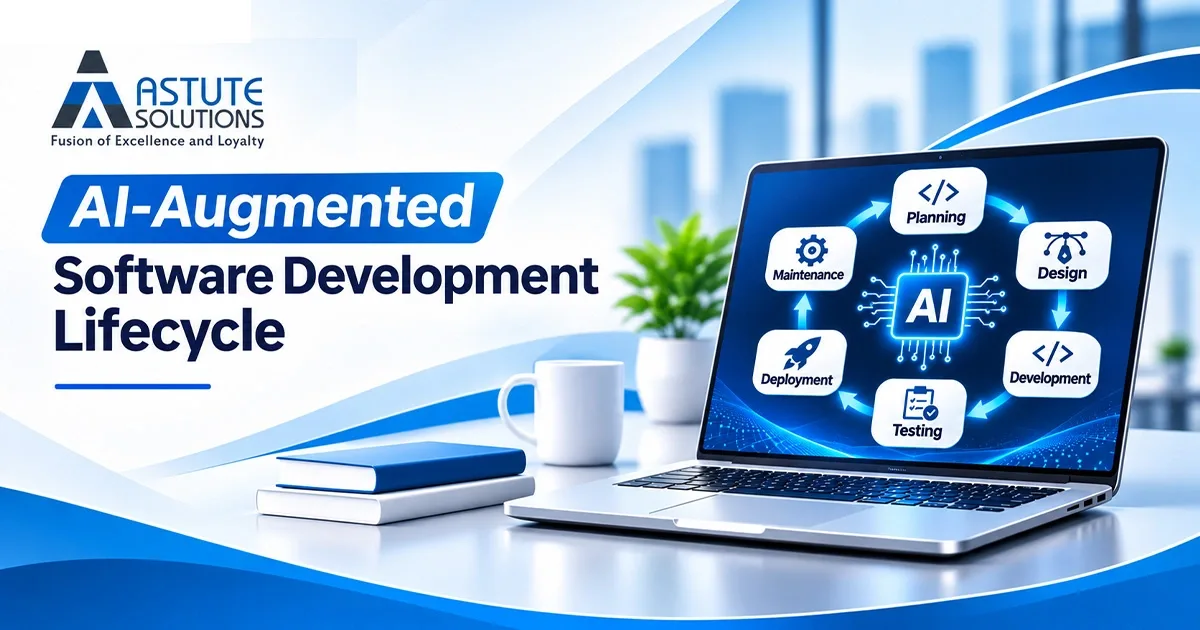
Our guide to the AI-Augmented Software Development Lifecycle explains how AI-assisted activities can be incorporated into a structured software delivery process.
How to Reduce SaaS Development Cost Without Compromising Quality
1. Validate Customer Demand Before Building a Large Product
Customer interviews, prototype testing, and early commercial discussions can reveal whether the proposed product addresses a problem that customers genuinely want to solve. This reduces the risk of investing in features that do not contribute to adoption or revenue.
2. Define the Smallest Commercially Useful Product
Prioritize the workflow that creates the clearest customer value. For example, a scheduling platform might launch with appointment creation, calendar availability, and reminders before investing in complex analytics or multiple booking channels.
3. Use Managed Services for Commodity Capabilities
Authentication, payment processing, email delivery, and infrastructure management often have established service options. Using appropriate managed services can reduce implementation effort, provided their costs, limitations, data handling, and long-term dependencies are acceptable.
4. Avoid Premature Architecture Decisions
Choose an architecture that supports current requirements and foreseeable growth without introducing unnecessary distributed-system complexity. It is usually more economical to add infrastructure when measured demand justifies it than to operate an elaborate environment that the product does not yet need.
5. Establish Acceptance Criteria Before Development
Clearly defined acceptance criteria reduce disagreement about what a feature is supposed to do. For a subscription feature, acceptance criteria might specify the expected behavior when a payment fails, a customer upgrades, a subscription expires, or the billing provider delivers a duplicate event.
6. Reuse Design and Engineering Components
Consistent interface components, validation patterns, integration abstractions, and automated testing foundations reduce repeated implementation work. Reusable components also make later improvements easier to maintain across the product.
7. Use AI-Augmented Development With Human Oversight
AI tools can assist engineers with code exploration, test preparation, documentation, and selected implementation activities. However, their value depends on the workflow, codebase, review requirements, and ability to verify generated output. Businesses should evaluate actual delivery efficiency rather than assume a guaranteed percentage reduction in development costs.
Astute Solutions' AI-native software development approach combines AI-assisted workflows with engineering responsibility for architecture, validation, and production quality.
8. Release Incrementally
Breaking development into measurable releases allows businesses to validate assumptions and reassess priorities before investing in additional functionality. This can prevent expensive commitments to features that customer feedback later shows are unnecessary.
9. Monitor Operating Costs From the Beginning
Track cloud consumption, database activity, third-party usage, AI requests, and support effort. Cost visibility at the customer and feature level makes it easier to identify operational inefficiencies before they become difficult to correct.
Which SaaS Features Should You Build Now and Which Can Wait?
Reducing scope is more effective when businesses distinguish between essential launch capabilities and features that can be introduced after product validation.
| Capability | Recommended MVP Scope | Possible Later Expansion |
|---|---|---|
| Authentication | Secure sign-in and account recovery | Additional enterprise identity providers |
| Billing | Simple plans and reliable subscription lifecycle | Complex usage pricing and negotiated contracts |
| Reporting | Essential operational metrics | Configurable dashboards and custom reports |
| Integrations | One or two commercially essential integrations | Broader integration ecosystem |
| Mobile access | Responsive web experience where sufficient | Native apps and advanced offline capabilities |
| Security | Required access controls, isolation, monitoring and data protection | Additional controls justified by customer requirements |
| AI functionality | One evaluated, commercially useful capability | Additional automation and controlled agentic workflows |
Mandatory legal, security, accessibility, or customer requirements should never be deferred solely to reduce the MVP budget.
How to Compare SaaS Development Quotes
Two quotations may look comparable because they describe the same product, but their actual delivery commitments may differ significantly. Before choosing a development partner, request a breakdown of the work included and the assumptions behind the estimate.
| Evaluation Area | Questions to Ask |
|---|---|
| Scope | Which workflows, features and edge cases are included? |
| Engineering effort | How many hours are estimated for each delivery activity? |
| Team composition | Which engineering, design, QA and management roles will participate? |
| Architecture | How will the product support tenants, permissions, data and future growth? |
| Quality assurance | What functional, integration, security and performance testing is included? |
| External expenses | Which cloud services, licenses and external assessments are excluded? |
| Scope changes | How will new requirements affect cost and delivery timelines? |
| Intellectual property | Who owns the source code, infrastructure configuration and project documentation? |
| Launch readiness | What production deployment and operational handover activities are included? |
| Post-launch support | Which defects are covered, and what ongoing maintenance arrangements are available? |
Worked Example: A $40,000 Quote vs a $55,000 Quote
Imagine two vendors submitting proposals for the same SaaS product. The first vendor offers a $40,000 development quotation but excludes dedicated testing, production deployment preparation, and integration stabilization. The second vendor quotes $55,000 and includes those activities.
If the excluded testing requires $8,000, deployment preparation requires $4,000, and integration stabilization requires $5,000, the first proposal may ultimately cost $57,000. These are hypothetical quotations. They illustrate why founders should compare equivalent deliverables rather than selecting the lowest headline price.
What Should Be Included in a Production-Ready SaaS Development Budget?
A production-ready SaaS application should meet the operational requirements appropriate to its intended users, business model, and risk profile. Before approving a launch, businesses should confirm that the agreed delivery includes the following where applicable:
- Validated customer onboarding and core business workflows.
- Secure authentication and correctly enforced permissions.
- Tested tenant isolation and customer data boundaries.
- Reliable subscription management and billing event handling.
- Input validation and appropriate error handling.
- Monitoring, logging, and operational alerts.
- Documented backup and restoration procedures.
- Validated integrations and recovery from common external failures.
- Performance testing against expected operating conditions.
- Documented deployment and rollback procedures.
- Source code, configuration, and relevant technical documentation.
- Defined ownership of ongoing maintenance and production support.
What Information Do You Need Before Requesting a SaaS Development Estimate?
A development team can provide a more useful estimate when the business has documented its product requirements and commercial assumptions.
Prepare the following information before requesting a detailed proposal:
- Business objective: What customer problem does the product solve, and how will it generate revenue?
- Target users: Which customer organizations and individual roles will use the platform?
- Core workflows: Which activities must customers complete in the first commercial release?
- Subscription model: Will the product charge per seat, per organization, per transaction, or through usage-based pricing?
- Data requirements: What information will be collected, processed, stored, and migrated?
- Integrations: Which external applications must connect to the product at launch?
- Security obligations: What customer, contractual, regulatory, or operational requirements apply?
- Expected workload: What transaction volumes, concurrent activity, and data growth should the platform support?
- Launch budget: How much funding is available for both development and post-launch operation?
- Success criteria: What measurable results would justify further investment in the product?
When these requirements remain unclear, a dedicated product discovery phase can be more useful than requesting an immediate fixed-price quotation based on an incomplete feature list.
How Astute Solutions Approaches SaaS Development
Successful SaaS development requires coordination between product strategy, software architecture, design, engineering, quality assurance, and operational planning. Astute Solutions provides technology development services for businesses building SaaS products, custom applications, intelligent automation systems, and connected digital platforms.
Rather than treating every SaaS idea as the same type of development project, the appropriate approach depends on the product's commercial objectives, existing systems, technical requirements, and expected evolution.
A new startup may benefit from a structured discovery process and a narrowly scoped MVP. An established software business may need architectural improvements, new integrations, dedicated engineering capacity, or AI-powered capabilities.
Businesses can explore the company's SaaS and custom software engineering capabilities when evaluating how to turn a product concept into a dependable commercial platform. For products requiring continuous improvement, dedicated AI-augmented development teams provide another engagement option.
The objective is to build software around measurable customer and business requirements while maintaining appropriate technical foundations for future development.
Final Thoughts:
SaaS development cost in 2026 varies significantly because SaaS products differ in scope, architecture, customer requirements, integrations, security obligations, and operating models. A focused MVP may be achievable with a development budget of $15,000–$45,000, while a more complete commercial platform may require $45,000–$200,000 or more. Complex enterprise products can require considerably larger investments.
However, the initial build cost is only one part of the decision. Businesses must also understand how much funding is required to operate the product, support customers, manage infrastructure, maintain integrations, and continue improving the software after launch.
The strongest development strategy is not necessarily the cheapest or the most technically advanced. It is the strategy that delivers the required customer value, establishes reliable technical foundations, and preserves enough financial runway to develop a sustainable SaaS business.
Planning to Build a SaaS Product?
Astute Solutions helps businesses plan, design, develop, and evolve SaaS platforms through structured software engineering and AI-augmented development.
Whether you are validating an MVP, replacing an existing platform, or expanding a commercial SaaS product, begin with a clear understanding of the scope, architecture, budget, and expected business outcomes.
Discuss Your SaaS ProjectFrequently Asked Questions