
Imagine a customer contacts your company because their subscription payment was successful, but their account still shows an inactive status. Resolving the issue requires checking payment records, subscription data, account permissions, and previous support interactions.
In a conventional workflow, an employee moves between several applications, compares the information, identifies the problem, and decides what to do next. A simple chatbot might explain the troubleshooting process, but it cannot necessarily investigate the issue or complete the required actions.
An agentic AI system offers another approach. With appropriate integrations and permissions, it can retrieve relevant records, investigate discrepancies, propose a resolution, and complete authorized steps while escalating sensitive decisions to a human.
Agentic AI as a Service makes these capabilities available through a managed delivery model, potentially reducing the need for businesses to build and operate every component independently.
However, deploying AI agents successfully requires more than connecting a language model to business applications. Organizations must consider workflow design, data quality, security, reliability, operational costs, and measurable outcomes.
This guide explains what Agentic AI as a Service means, how it works, where it creates business value, the risks organizations need to manage, and how to evaluate whether an agentic solution is appropriate for a particular workflow.
Quick Answer: What Is Agentic AI as a Service?
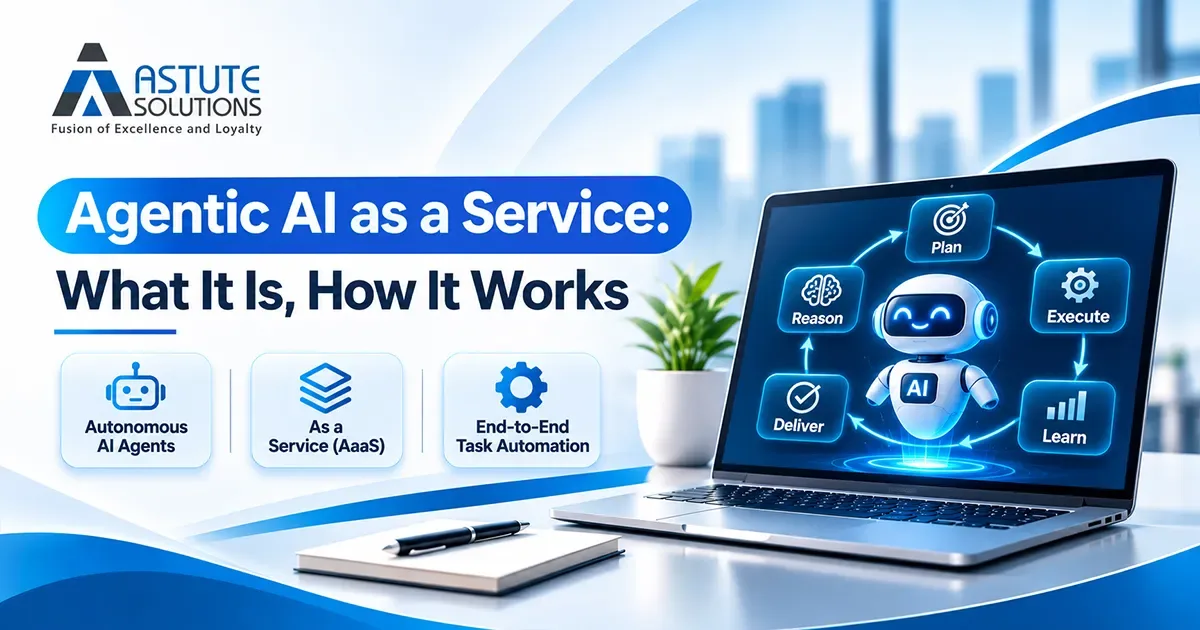
Agentic AI as a Service is a managed service model that provides AI agents capable of pursuing defined goals, interacting with authorized tools, coordinating multi-step workflows, and taking permitted actions with appropriate oversight.
Unlike a traditional AI assistant that primarily generates answers, an agentic system can use information from connected applications to perform selected tasks and evaluate the results.
Example: A customer support agent could investigate an account issue, retrieve authorized billing information, identify a discrepancy, prepare a resolution, and request approval before changing sensitive records.
Business value: The potential benefit is reducing repetitive coordination work while maintaining human control over decisions that carry significant financial, security, or operational risk.
Key Takeaways
- Agentic AI goes beyond content generation. Agents can select tools, coordinate steps, observe results, and pursue defined outcomes.
- Managed services reduce some implementation responsibilities. However, customers still need to evaluate security, integrations, governance, and vendor responsibilities.
- Not every workflow needs an AI agent. Fixed, predictable processes may be better handled by conventional automation.
- Enterprise value depends on reliable execution. Successful outcomes matter more than the number of agent actions or generated responses.
- Security boundaries are essential. Agents should operate with restricted permissions, appropriate approval requirements, and auditable execution records.
- Cost comparisons must include the full workflow. Model usage, API calls, failed attempts, monitoring, human review, and maintenance all contribute to operating costs.
- A narrow pilot is usually a better starting point. Organizations should validate one measurable workflow before expanding agent autonomy.
What Is Agentic AI?
Agentic AI refers to artificial intelligence systems designed to pursue goals through a sequence of decisions and actions rather than producing only a single response.
A typical agentic system combines language-model reasoning with tools, instructions, application interfaces, execution state, and feedback mechanisms.
For example, a language model can summarize an invoice. An agentic workflow may go further by retrieving the invoice, comparing it against an approved purchase order, checking payment status, identifying an exception, and preparing the case for review.
The difference is not simply the sophistication of the language model. It is the ability to coordinate work using connected systems within defined operational boundaries.
What Makes an AI System Agentic?
Several capabilities distinguish agentic workflows from basic generative AI applications.
- Goal interpretation: The system receives an objective and determines which information or actions may be required.
- Tool interaction: It accesses approved APIs, databases, search systems, or business applications.
- Adaptive execution: It can select different permitted steps depending on the information available.
- State management: It tracks completed actions, previous results, and unresolved tasks.
- Feedback processing: It evaluates tool responses and determines whether to continue, retry, stop, or escalate.
- Outcome verification: It checks whether the intended result has been achieved instead of assuming that a successful tool call means the entire task is complete.
These capabilities do not require unrestricted autonomy. In production environments, the most reliable design may allow an agent to investigate and recommend actions while requiring human approval for consequential changes.
What Does Agentic AI as a Service Mean?
Agentic AI as a Service describes a delivery model in which an organization accesses managed agentic capabilities rather than independently operating every part of the underlying system.
Depending on the provider, the service may include model access, agent orchestration, integrations, monitoring, evaluation tools, security controls, and operational infrastructure.
The exact responsibilities vary significantly. Some services provide ready-made agents for common business functions, while others offer platforms for building custom agents.
Managed Agent Platforms
Managed platforms provide infrastructure and development capabilities for designing, deploying, and monitoring agents. Businesses typically configure their own workflows, connect internal systems, and define operating policies.
Prebuilt Business Agents
Some providers offer agents designed for specific activities such as customer support, sales assistance, document processing, or IT service management.
These solutions may accelerate adoption when the required workflow closely matches the provider's supported functionality.
Custom Agentic AI Services
Organizations with specialized processes may need custom agent development, tailored integrations, domain-specific evaluations, and additional governance controls.
For businesses with existing applications, AI systems and automation development can provide a practical route to introducing agentic capabilities without replacing established software infrastructure.
How Does Agentic AI as a Service Work?
Agentic systems generally operate through a controlled sequence of goal interpretation, information retrieval, tool selection, execution, and verification.
The precise implementation depends on the workflow. Some systems use a single agent with multiple tools, while others coordinate specialized agents through an orchestration layer.
Step 1: Receive and Interpret the Objective
The workflow begins with a user request, system event, or predefined business trigger.
For example, a support request might ask the system to investigate why a customer's subscription upgrade has not taken effect.
The agent needs to identify the requested outcome, relevant account reference, available tools, and actions it is permitted to perform.
Step 2: Retrieve Relevant Information
The system gathers information from authorized sources, which may include databases, internal documentation, support records, or external applications.
Retrieval-augmented generation can help provide relevant context, but retrieved information must be checked for relevance, permissions, and trustworthiness.
Documents, emails, and web content should be treated as untrusted input rather than instructions that can override system policies.
Step 3: Select an Appropriate Action
Based on the available information, the agent selects a permitted tool or next step.
For example, it might compare payment records against subscription status or request additional information when the evidence is incomplete.
Tool selection should operate within predefined permissions. The model should not be able to grant itself additional access simply because a task appears to require it.
Step 4: Execute Through Approved Tools
The system invokes an authorized API or application operation.
Production implementations should validate parameters, enforce permissions, record execution details, and prevent duplicate operations when retries occur.
Step 5: Observe and Verify the Result
After an action, the system checks the tool response and, where possible, verifies the authoritative final state.
For example, receiving a successful API response does not necessarily prove that a subscription issue has been resolved across every connected system.
Step 6: Continue, Stop, or Escalate
If the workflow remains incomplete, the agent may take another permitted step. If the evidence conflicts or the required action exceeds its authority, it should stop and escalate.
Reliable stopping conditions are essential for preventing uncontrolled execution loops, unnecessary costs, and unintended changes.
Agentic AI Architecture: The Components Behind a Production System
A production-ready agentic service requires more than a language model and a collection of API connections.
Its architecture should separate reasoning from authorization, execution, monitoring, and business rules.
| Architecture Component | Primary Responsibility | Important Design Consideration |
|---|---|---|
| Language Model | Interpret goals and generate structured decisions | Evaluate accuracy, reliability, latency, and cost |
| Orchestration Layer | Coordinate workflow steps and tool calls | Maintain state, limits, and recovery procedures |
| Tool Gateway | Connect agents with business applications | Validate inputs and enforce permissions |
| Knowledge and Retrieval | Provide relevant business information | Respect access controls and source quality |
| Identity and Authorization | Control what agents can access or modify | Apply least privilege and scoped credentials |
| Human Approval Layer | Review sensitive decisions and actions | Provide clear context and audit trails |
| Observability | Record execution, errors, and performance | Support troubleshooting and compliance |
| Evaluation Framework | Test outcomes and behavioral reliability | Use representative and adversarial test cases |
Why the Orchestration Layer Matters
Orchestration determines how the system moves between reasoning, tool execution, and validation.
Without reliable orchestration, an agent may repeat actions, lose context, or continue operating after a failure.
A well-designed workflow can preserve execution state, enforce timeouts, manage retries, and route exceptional cases to a human.
Why Business Rules Should Remain Outside the Model
Important business constraints should not depend entirely on language-model instructions.
For example, a policy prohibiting refunds above an approved threshold should be enforced through application logic and authorization controls.
The agent can recommend a refund, but the execution layer should independently determine whether the action is permitted.
Single-Agent vs Multi-Agent Architecture
A single agent can often manage a narrowly defined workflow using several tools. This approach is generally easier to test, observe, and maintain.
Multi-agent systems divide responsibilities among specialized agents, potentially supporting more complex tasks. However, they also introduce coordination overhead, additional model calls, and more failure scenarios.
Organizations should avoid introducing multiple agents unless specialization provides measurable advantages over a simpler architecture.
Agentic AI vs Generative AI vs Traditional Automation
Agentic AI is not the best solution for every business problem. Understanding the differences between conventional automation, generative AI, and agentic workflows helps organizations avoid unnecessary complexity.
| Capability | Traditional Automation | Generative AI | Agentic AI |
|---|---|---|---|
| Primary Purpose | Execute predefined rules | Generate or transform information | Coordinate goal-directed actions |
| Workflow Flexibility | Primarily fixed | Responds to prompts | Can adapt permitted steps |
| Tool Interaction | Preconfigured integrations | Optional | Central to many implementations |
| Decision Process | Explicit business rules | Model-generated output | Model-assisted decisions within controls |
| Example | Send a scheduled reminder | Draft a customer email | Investigate an issue and prepare a resolution |
| Operational Risk | Depends on configured actions | Incorrect generated information | Incorrect information and potentially incorrect actions |
The important distinction is that an agentic system may interact with operational systems and change business state.
That capability increases its potential value, but also raises the importance of authorization, validation, and accountability.
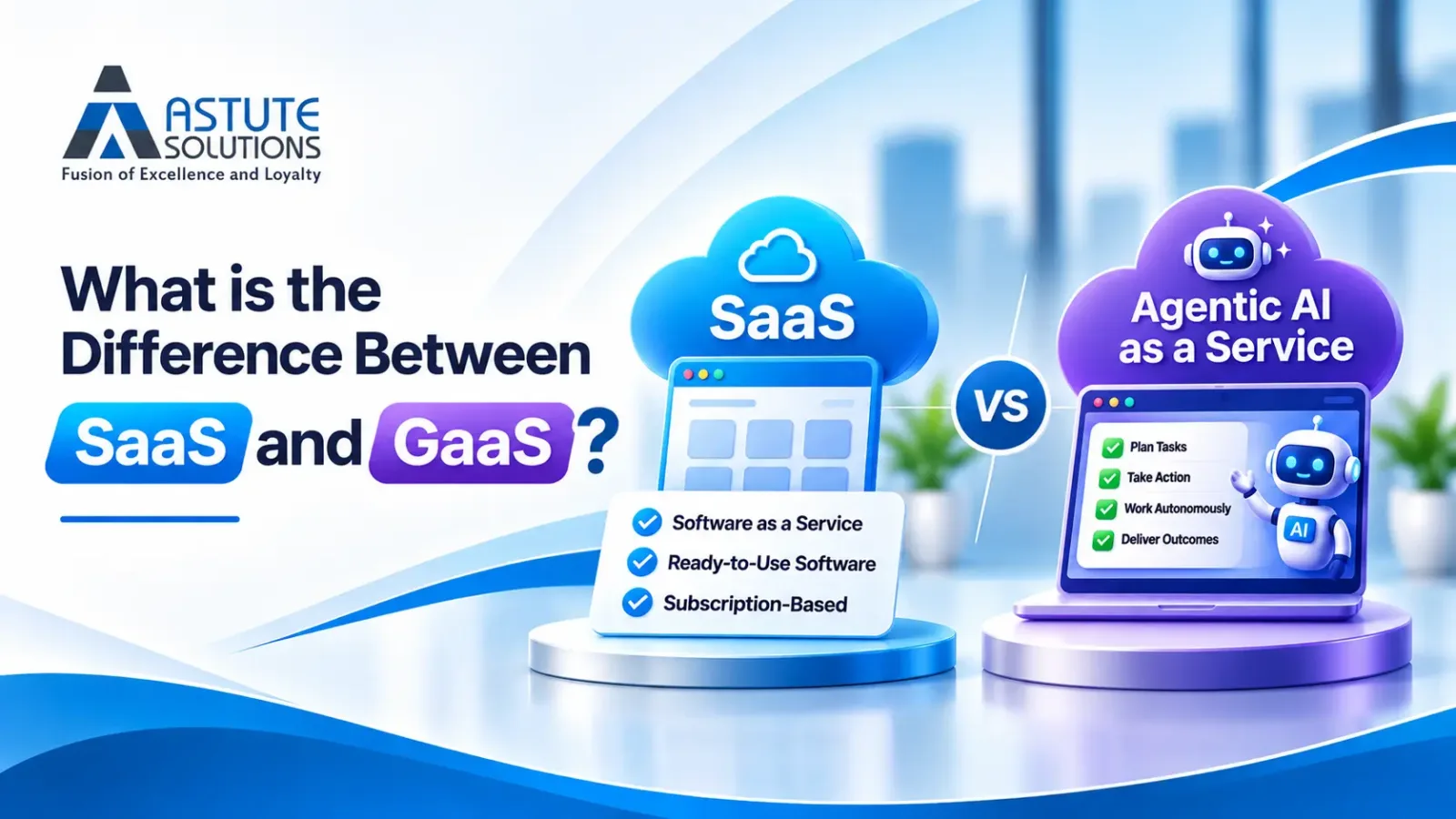
For a broader discussion of software delivery models, see our existing guide on SaaS vs GaaS and the differences between application software and agentic services.
Business Benefits of Agentic AI as a Service
1. Reduced Manual Coordination
Many business processes involve several applications even when each individual step is relatively simple.
Employees may need to collect information from a CRM, review documents, update a project management system, and notify another team.
An agentic workflow can coordinate selected activities across these systems, reducing repetitive navigation and information transfer.
The benefit is greatest when tasks involve variable information that makes purely rule-based automation difficult.
2. Faster Handling of Complex Requests
Agents can retrieve relevant information, compare records, and prepare recommended actions without requiring employees to perform every intermediate step.
This may reduce response times for workflows such as support investigations, document reviews, or internal service requests.
However, faster execution only creates value when results remain accurate and reliable.
3. Improved Access to Business Knowledge
Agentic systems can combine authorized knowledge retrieval with workflow execution.
For example, an internal IT agent might consult approved documentation, inspect a service ticket, and suggest troubleshooting steps based on the organization's policies.
Knowledge quality, freshness, and access permissions remain critical.
4. More Consistent Workflow Execution
Well-designed systems can apply standardized validation steps, record decisions, and consistently enforce defined operating boundaries.
This can help reduce process variation, particularly when employees currently rely on informal manual procedures.
Consistency is not automatic. Agentic behavior must be evaluated and constrained to prevent unexpected deviations.
5. Better Scalability for Selected Operations
Managed services can help organizations handle changing workloads without proportionally increasing manual coordination effort.
However, scalability depends on API limits, infrastructure capacity, model latency, vendor pricing, and the amount of human review required.
6. Stronger Operational Visibility
Agent execution records can reveal where workflows fail, which exceptions occur frequently, and where human intervention remains necessary.
These insights can support process improvement even when full automation is not appropriate.
Real-World Agentic AI Use Cases Across Business Functions
The most promising use cases are typically repetitive enough to measure, variable enough to benefit from contextual reasoning, and controlled enough to manage operational risk.
The following examples illustrate possible implementations. They are not claims of completed Astute Solutions customer deployments.
1. Customer Support and Account Resolution
Customer support teams frequently investigate issues involving billing, subscriptions, product access, and account configuration.
An agent can retrieve authorized account records, compare information across systems, identify likely causes, and prepare a resolution.
For example, when a subscription upgrade does not appear in an account, the agent might verify payment status, check entitlement records, and identify whether the issue requires a billing correction or technical investigation.
Low-risk informational responses may be automated, while account modifications or financial adjustments should follow explicit approval policies.
Useful metrics: Verified resolution rate, average handling time, escalation accuracy, and customer satisfaction.
2. Sales Research and CRM Enrichment
Sales representatives often spend time collecting information about prospective customers before outreach.
An agentic system can retrieve permitted public information, identify relevant company developments, summarize business context, and prepare account briefs.
It may also recommend CRM updates based on verified information.
However, the system should not automatically treat every generated insight as factual. Important details should retain source references, and outreach should follow applicable privacy and communication rules.
Useful metrics: Research time per account, verified data accuracy, and accepted CRM updates.
3. Finance and Invoice Exception Management
Finance teams regularly encounter invoices that do not match purchase orders, payment records, or contractual terms.
An agent can compare authorized documents, identify discrepancies, classify exceptions, and prepare recommendations for review.
For example, it might flag an invoice whose amount exceeds the approved purchase order and attach the relevant evidence.
Payment authorization, bank-detail changes, and other sensitive financial operations should remain protected by deterministic controls and appropriate human approval.
Useful metrics: Exception detection accuracy, review time, false-positive rate, and policy compliance.
4. IT Service Management
Internal IT teams handle access requests, application incidents, configuration issues, and routine troubleshooting.
An agentic workflow can retrieve ticket context, consult approved documentation, inspect permitted diagnostic information, and recommend next steps.
For example, an agent could investigate a reported application outage by checking service health, recent deployments, and available logs.
Production changes, privileged access modifications, and destructive operations require stronger authorization and change-management procedures.
Useful metrics: Time to diagnosis, correctly classified incidents, and safe resolution rate.
5. Document Processing and Compliance Review
Organizations often process contracts, onboarding documents, vendor submissions, and policy records containing information in different formats.
An agent can extract relevant details, compare documents against approved requirements, identify missing information, and prepare structured review summaries.
For example, a vendor onboarding workflow might check whether required documentation is present and route incomplete submissions to the responsible team.
Legal interpretations and high-impact compliance decisions should be reviewed by qualified professionals.
Useful metrics: Extraction accuracy, exception detection, review time, and audit completeness.
6. SaaS Product Operations
SaaS businesses manage subscription events, onboarding workflows, customer notifications, support requests, and product usage information.
Agentic capabilities can help coordinate activities across these systems without replacing the underlying applications.
For example, an agent might investigate why a customer failed to complete onboarding by reviewing permitted account events, identifying a likely blocker, and recommending an appropriate next action.
Businesses planning these capabilities can integrate them into their existing platforms through custom SaaS and software development, rather than rebuilding core product functionality around an AI agent.
Useful metrics: Onboarding completion, investigation time, and verified task resolution.
7. Software Engineering and Development Operations
Software teams can use agentic workflows to support code investigation, test preparation, documentation, and issue triage.
For example, an agent may inspect an approved repository, identify code associated with a reported defect, and prepare a proposed change for developer review.
Automated tests, security scanning, code review, and deployment controls should remain part of the delivery process.
Agentic tools can assist engineering teams, but they do not eliminate the need for experienced developers or reliable quality assurance.
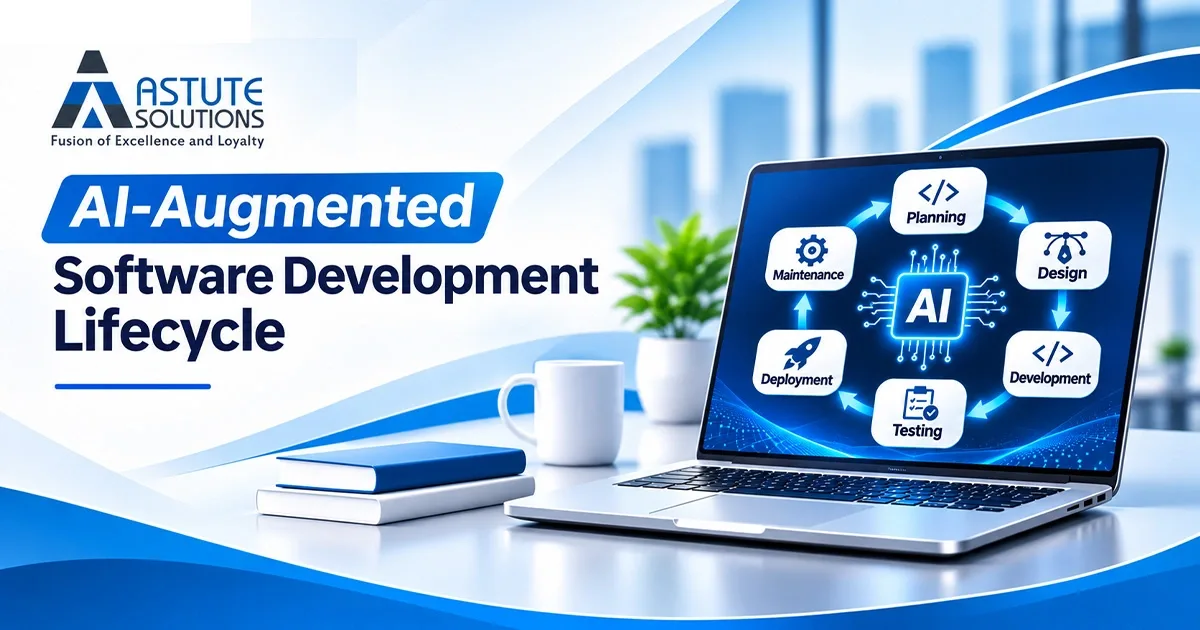
Our article on the AI-Augmented Software Development Lifecycle explores how AI-assisted activities can fit into the broader software development process.
Which Business Workflows Are Good Candidates for Agentic AI?
Choosing the right workflow is often more important than choosing the most advanced language model.
Organizations should evaluate how much contextual reasoning is required, whether reliable data is available, how actions can be verified, and what happens if the system makes a mistake.
A workflow involving fixed rules and predictable inputs may be cheaper and more reliable with conventional automation.
| Candidate Workflow | Agentic Value | Suggested Initial Scope |
|---|---|---|
| Support ticket investigation | High when evidence spans multiple systems | Read records, prepare resolution, route for approval |
| Sales account research | Moderate to high for variable research tasks | Compile sourced account briefs; do not send messages automatically |
| Invoice exception review | High for ambiguous discrepancies | Flag exceptions and recommend next steps; keep payment changes human controlled |
| Scheduled renewal reminders | Low when rules are fixed | Use deterministic automation instead |
| Production infrastructure changes | Potentially high, but high operational risk | Read-only diagnostics and change proposals first |
A Practical Workflow Selection Framework
Before investing in an agentic solution, evaluate the following questions:
- Frequency: Does the task occur often enough to justify implementation and maintenance?
- Variability: Does the process require interpretation of changing information rather than fixed rules?
- Data availability: Can the system access reliable, authorized information?
- Risk: What is the consequence of an incorrect recommendation or action?
- Verifiability: Can successful completion be independently confirmed?
- Integration complexity: Are the required systems accessible through stable APIs or approved interfaces?
- Economic value: Can improvements in time, quality, or cost be measured against a baseline?
A strong pilot candidate has clear boundaries, measurable success criteria, manageable risk, and a meaningful amount of manual coordination work.
Detailed Example: Building an Agentic Customer Support Workflow
Consider a SaaS company that receives recurring support requests about subscription activation.
Customers sometimes complete payment successfully, but their accounts do not immediately reflect the updated subscription status.
Investigating the issue requires checking billing records, subscription entitlements, and application account data.
Stage 1: Identify the Customer and Request
The workflow must verify that the request relates to the correct account before accessing additional information.
Stage 2: Retrieve Billing and Subscription Records
The agent compares payment status, subscription identifiers, timestamps, and relevant account records.
Stage 3: Investigate the Discrepancy
The agent should distinguish confirmed facts from hypotheses and avoid inventing explanations when evidence is incomplete.
Stage 4: Recommend a Resolution
For low-risk cases, the system may recommend a predefined troubleshooting action. For conflicting records or financial discrepancies, it should request human review.
Stage 5: Execute an Authorized Action
For example, a narrowly scoped entitlement synchronization operation might be allowed after validation, while a refund or account ownership change requires separate approval.
Stage 6: Verify and Record the Outcome
The ticket should not be marked resolved solely because an API returned a successful response. The system must confirm that the expected business state was reached.
What Happens When the Workflow Fails?
Failure handling is a critical difference between a demonstration and a production-ready system.
Suppose the billing platform confirms payment, but the subscription database returns conflicting information.
The agent should not guess which record is correct. Instead, it should preserve the evidence, stop sensitive operations, and escalate the case.
If an API request times out, the system should determine whether the action was completed before attempting a retry.
Idempotency controls, transaction references, and recovery procedures help prevent duplicate updates and inconsistent records.
Security, Privacy, and Governance Risks of Agentic AI
Agentic AI introduces risks that differ from those of systems that only generate information.
When an agent can call APIs, modify records, or interact with external services, incorrect decisions may affect real business operations.
1. Excessive Permissions
An agent with broad access may be able to perform actions beyond its intended purpose.
Organizations should apply least-privilege access, scoped credentials, role-based controls, and separation between read-only and write operations.
2. Prompt Injection
Agents may encounter malicious instructions embedded in retrieved documents, emails, web pages, or other external content.
These instructions may attempt to redirect the agent, expose information, or trigger unauthorized actions.
Untrusted content should not be allowed to override system instructions, authorization policies, or tool permissions.
3. Incorrect Tool Execution
An agent may select the wrong tool, provide incorrect parameters, or misunderstand the intended action.
Tool gateways should validate inputs, enforce schemas, restrict allowed operations, and independently check authorization.
4. Sensitive Data Exposure
Agentic workflows may process customer records, internal documents, financial information, or other sensitive data.
Organizations should evaluate data minimization, encryption, retention policies, vendor processing arrangements, and applicable privacy requirements.
5. Incomplete or Conflicting Actions
Multi-step workflows can leave systems in inconsistent states when one operation succeeds and another fails.
Recovery mechanisms should include execution tracking, safe retries, reconciliation, and appropriate compensating actions where supported.
6. Uncontrolled Execution Costs
Repeated reasoning steps, unnecessary API calls, and failed execution loops can increase costs.
Organizations should configure execution limits, timeouts, retry budgets, and spending thresholds.
7. Model and Workflow Changes
Changes to models, prompts, tools, or connected applications may affect agent behavior.
Production systems should use version control, regression testing, representative evaluation datasets, and staged deployments.
For additional technical guidance, organizations can review the OWASP GenAI Security Project and the NIST AI Risk Management Framework.
How Much Does Agentic AI as a Service Cost?
The cost of Agentic AI as a Service depends on the provider, deployment model, number of executions, model usage, integration complexity, and required operational controls.
Some services charge subscriptions, while others use consumption-based or task-based pricing.
Custom implementations may also require initial engineering, integration, security review, testing, and ongoing maintenance.
Common Cost Components
- Language model inference and token usage
- External API and tool calls
- Agent orchestration and hosting
- Data storage and retrieval
- Monitoring and observability
- Evaluation and regression testing
- Human review and escalation
- Security and compliance controls
- Integration development and maintenance
- Failed executions and retries
Illustrative ROI Example: 2,000 Monthly Support Requests
Consider a hypothetical company processing 2,000 support requests per month.
Assume each request currently requires six minutes of employee time, and the fully loaded labor cost is $25 per hour.
The manual workflow therefore requires 200 hours of work each month, representing $5,000 in labor costs.
Now assume an agent-assisted workflow resolves 70% of eligible requests without additional manual handling, while the remaining 30% still require six minutes each.
For illustration, assume agent processing costs $0.80 per request and monitoring overhead is $300 per month.
| Cost Component | Manual Workflow | Agent-Assisted Workflow |
|---|---|---|
| Monthly Requests | 2,000 | 2,000 |
| Manual Hours | 200 | 60 |
| Labor Cost | $5,000 | $1,500 |
| Agent Processing | Not applicable | $1,600 |
| Monitoring Overhead | Not included | $300 |
| Total Monthly Operating Cost | $5,000 | $3,400 |
| Illustrative Monthly Difference | Baseline | $1,600 lower |
| Illustrative Cost Reduction | Baseline | 32% |
Why Cost per Accepted Outcome Matters
Counting completed agent runs can be misleading if some results are incorrect or require additional employee correction.
This metric connects agent spending to actual business results.
For example, a workflow that appears inexpensive per execution may become costly when repeated attempts, human corrections, and failed tasks are included.
How to Measure Agentic AI Performance
Production systems should be evaluated using measurable outcomes rather than demonstrations or subjective impressions.
Organizations need to understand whether the agent completes the intended task, follows policy, escalates appropriately, and improves the existing process.
| Metric | What to Measure | Why It Matters |
|---|---|---|
| Verified completion rate | Cases that reach the correct final state divided by all eligible cases | Measures genuine task success, not fluent explanations |
| Unsafe-action rate | Unauthorized or policy-violating attempted actions per run | Highlights governance failures even when execution is blocked |
| Escalation precision | Whether uncertain or high-risk cases are routed to a person appropriately | Prevents false confidence and unnecessary manual review |
| Recovery success | Failed runs reconciled or safely stopped without inconsistent records | Tests operational resilience |
| Latency and cost per accepted case | End-to-end time and total cost divided by verified accepted outcomes | Reveals whether the service improves the business process |
Establish a Baseline Before Deployment
Before introducing an agent, measure the current workflow's completion time, error rate, operating cost, and human effort.
Without a baseline, improvements may be difficult to distinguish from normal changes in workload or business conditions.
Test Difficult Cases, Not Only Successful Examples
Evaluation datasets should include incomplete information, conflicting records, unavailable tools, unauthorized requests, and ambiguous instructions.
These cases reveal whether the system behaves safely when normal execution is not possible.
Monitor Quality After Deployment
Agent performance can change when business processes, connected applications, data sources, or underlying models change.
Continuous monitoring and periodic evaluation help detect these problems before they affect large numbers of customers.
How to Implement Agentic AI as a Service
A successful implementation should begin with a clearly defined business problem rather than a general objective to automate everything.
Phase 1: Identify and Document the Workflow
Map the current process, including triggers, applications, manual activities, exceptions, approvals, and expected outcomes.
Identify which steps require contextual reasoning and which can remain deterministic.
Phase 2: Define Success and Risk Boundaries
Establish measurable targets for accuracy, completion time, cost, escalation, and policy compliance.
Document which operations the agent may perform and which require approval.
Phase 3: Assess Data and Integrations
Review the quality, availability, and permissions of required data sources.
Confirm that connected applications support stable, authorized interfaces and appropriate audit records.
Phase 4: Build a Narrow Pilot
Start with a limited workflow and a small set of tools.
For example, an initial support agent might retrieve records and recommend resolutions without modifying customer accounts.
Phase 5: Evaluate Against Realistic Cases
Test representative scenarios, including normal requests, incomplete data, conflicting records, tool failures, and attempted policy violations.
Use independently verified expected outcomes rather than relying only on the agent's own assessment.
Phase 6: Introduce Controlled Execution
After the system demonstrates acceptable reliability, introduce narrowly scoped execution privileges where appropriate.
Keep sensitive operations behind authorization and approval controls.
Phase 7: Monitor and Improve
Track operational performance, investigate failures, review user feedback, and refine the workflow.
Expand to additional use cases only when the original implementation demonstrates measurable value.
An Illustrative 90-Day Agentic AI Implementation Roadmap
The following roadmap provides a planning example for organizations introducing a narrowly scoped agentic workflow. Actual timelines depend on system complexity, integration access, security requirements, and organizational readiness.
| Timeline | Primary Activities | Expected Deliverable |
|---|---|---|
| Days 1–15 | Workflow discovery, baseline measurement, risk assessment | Defined use case and measurable success criteria |
| Days 16–30 | Data assessment, integration planning, architecture design | Approved technical design and access boundaries |
| Days 31–50 | Agent development, tool integration, logging, and validation | Initial controlled prototype |
| Days 51–65 | Evaluation, failure testing, security review, and corrections | Validated pilot candidate |
| Days 66–80 | Limited deployment, human review, and performance monitoring | Operational pilot results |
| Days 81–90 | Cost analysis, outcome review, and expansion decision | Documented recommendation for further investment |
Organizations should not interpret the timeline as a guarantee that a production-ready agent can be delivered within 90 days.
Complex enterprise integrations, regulated workflows, and high-risk actions may require additional development and validation.
Should You Build or Buy an Agentic AI Solution?
Businesses generally have three options: adopt a managed agentic service, build a custom solution, or extend existing software with agentic capabilities.
Buy a Managed Agentic Service
Buying may be appropriate when the workflow is common, the provider supports the necessary integrations, and its security and governance capabilities meet business requirements.
Organizations should evaluate vendor limitations, pricing transparency, data handling, service reliability, and exit options.
Build a Custom Agentic System
Custom development may be justified when the workflow is specialized, existing integrations are complex, or agentic capabilities provide meaningful competitive differentiation.
However, building requires engineering expertise, ongoing evaluation, monitoring, security maintenance, and operational support.
Extend Existing Applications
Many organizations already have reliable business applications that manage authoritative records and enforce important rules.
Adding an agentic orchestration layer may be more practical than replacing those applications.
For businesses developing connected customer-facing products, web and mobile product engineering can support the application interfaces and integrations required to introduce intelligent workflows.
| Decision Factor | Managed Service | Custom Development | Extend Existing Software |
|---|---|---|---|
| Initial Setup | May be faster for supported workflows | Requires dedicated design and development | Depends on existing architecture |
| Customization | Limited by provider capabilities | High flexibility | Focused on existing business requirements |
| Maintenance | Shared between provider and customer | Primarily customer responsibility | Shared across existing and new components |
| Integration Control | Provider-dependent | Greater architectural control | Uses existing systems where possible |
| Best Fit | Common, supported use cases | Specialized or differentiated workflows | Businesses with established applications |
How to Evaluate an Agentic AI Service Provider
A convincing demonstration is not sufficient evidence that an agentic service will perform reliably under production conditions.
Before choosing a provider, organizations should request clear answers about security, reliability, integrations, monitoring, and operational responsibilities.
| Evaluation Area | Questions to Ask |
|---|---|
| Reliability | How are successful outcomes verified? What happens when a task fails? |
| Security | Can agent permissions be restricted to specific tools, records, and operations? |
| Human Oversight | Which actions require approval, and how are approvals recorded? |
| Data Protection | Where is data processed, stored, retained, and shared? |
| Observability | Can administrators inspect tool calls, decisions, errors, and execution history? |
| Integrations | Does the provider support the required applications and authentication methods? |
| Evaluation | How are model changes tested against representative business scenarios? |
| Pricing | Are failed attempts, retries, tool calls, and monitoring included in the cost? |
| Exit Strategy | Can data, workflow definitions, and relevant logs be exported? |
Common Mistakes Businesses Make With Agentic AI
Automating Before Understanding the Process
Automating an inefficient workflow can preserve its underlying problems.
Organizations should simplify unnecessary steps and improve data quality before introducing agents.
Giving Agents Too Much Autonomy
Unrestricted access increases the consequences of incorrect decisions.
Start with read-only capabilities, recommendations, and approval-based execution before expanding permissions.
Ignoring Failure and Recovery
Agentic systems must handle unavailable tools, partial updates, conflicting data, and interrupted execution.
Recovery behavior should be designed and tested before production deployment.
Measuring Activity Instead of Outcomes
The number of generated responses or completed tool calls does not establish business value.
Measure verified results, operating costs, errors, and human effort.
Assuming More Agents Means Better Performance
Multi-agent architectures can introduce unnecessary complexity and cost.
Use the simplest architecture that reliably satisfies the workflow's requirements.
Skipping Human Review
Human oversight remains important for high-impact financial, legal, security, and customer-related decisions.
Approval controls should be based on the consequences of an action rather than a general assumption that the model is accurate.
The Future of Agentic AI as a Service
Agentic AI is likely to influence how businesses interact with software, particularly where employees currently coordinate work across multiple applications.
However, agentic systems still depend on reliable databases, application interfaces, identity controls, and business rules.
Traditional SaaS platforms are therefore unlikely to become irrelevant simply because agents can perform selected tasks.
Instead, organizations may increasingly combine established applications with controlled agentic workflows.
A CRM can remain the authoritative source for customer records while an agent assists with research and follow-up preparation. A billing platform can continue enforcing transaction rules while an agent investigates exceptions.
The long-term value of agentic AI will depend less on claims of autonomy and more on the ability to deliver reliable, secure, and economically justified outcomes.
How Astute Solutions Can Support Agentic AI Development
Introducing agentic capabilities often requires coordinated work across software architecture, API integrations, workflow design, security, and operational monitoring.
Astute Solutions provides technology services relevant to these requirements, including AI systems development, custom software engineering, and digital product development.
Businesses evaluating intelligent workflows can begin by identifying which existing processes require contextual reasoning and which can be improved through conventional automation.
Where agentic execution is appropriate, the next step is to design a controlled architecture around existing applications and business rules.
For more background on Astute Solutions' approach to developing technology products, read how Astute Solutions builds SaaS, AI systems, and digital products in the AI era.
The goal should not be to introduce AI agents into every process. It should be to select the right technical approach for each business problem and measure whether the resulting system creates genuine value.
Final Thoughts: Is Agentic AI as a Service Right for Your Business?
Agentic AI as a Service provides a way for organizations to introduce goal-directed AI workflows without necessarily building every component of the underlying infrastructure themselves.
Its potential value comes from coordinating work across systems, interpreting variable information, and executing selected actions within defined boundaries.
However, successful adoption requires more than model selection.
Organizations must understand their workflows, assess data quality, define permissions, evaluate operational risks, and measure independently verified outcomes.
For some processes, conventional automation will remain the simplest and most reliable solution. For others, controlled agentic workflows may reduce manual coordination and improve operational efficiency.
The strongest approach is to begin with a measurable business problem, introduce only the autonomy required, and expand after the system demonstrates reliable value.
Planning an Agentic AI Solution?
Astute Solutions helps businesses design custom software, integrate AI capabilities, and develop intelligent automation systems around real operational requirements.
Whether you are evaluating your first agentic workflow or extending an existing SaaS platform, a practical starting point is understanding the process, integrations, risks, and expected business outcomes.
Discuss Your Project With Astute Solutions