
Servidge
Vertical SaaS and business automation, built by Astute.
Business Platform
for Repair Shops
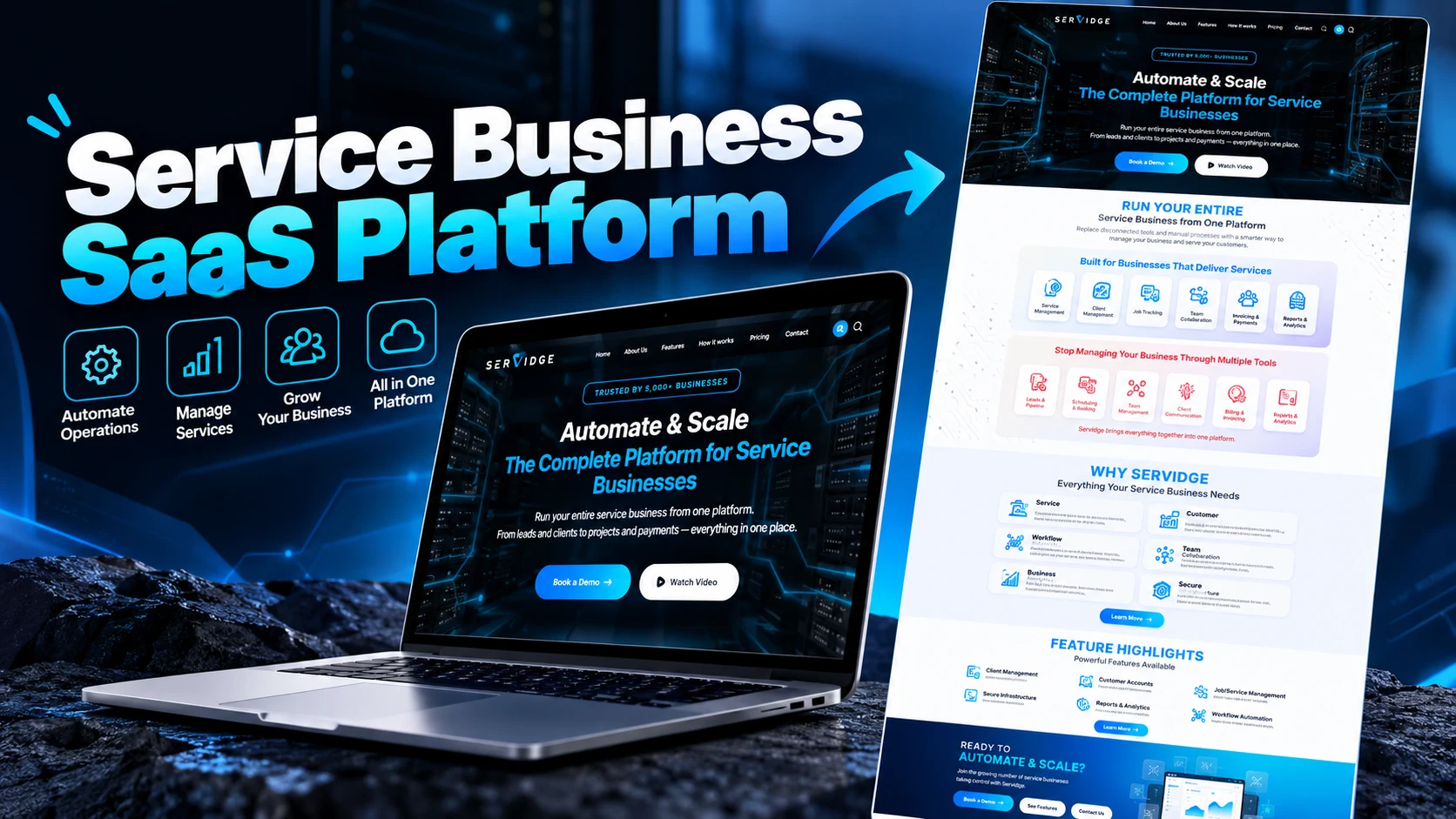
Building a Specialized Business Platform for the Mobile Device Repair Industry Servidge is a specialized software platform designed around the operational and commercial needs of GSM and mobile-device repair businesses. Repair businesses often operate across multiple disconnected activities — customer management, device processing, service workflows, reporting, digital sales and third-party services. Servidge brings these functions together into a purpose-built digital environment designed around the way the industry actually works. The principle behind the product is straightforward: Don't make the business adapt to generic software. Build software that understands the business.
- Vertical SaaS
- APIs
- Automation
- E-Commerce
- Reporting
 Repair workflowLive reporting
Specialized Industries Often Run on Generic Tools
Every industry develops its own workflows.
Its own terminology.
Its own processes.
Its own exceptions.
Its own relationships between customers, suppliers and services.
But many specialist businesses still operate using a mixture of:
Each tool may solve one part of the problem.
The business is left connecting everything manually.
Servidge was developed around the opportunity to bring more of that workflow into a single industry-specific platform.
Build Deeply for One Market Instead of Shallowly for Everyone
Horizontal software tries to serve thousands of different types of businesses.
Vertical SaaS takes the opposite approach.
It asks:
That allows the product to reflect:
For Servidge, that industry is mobile-device repair and GSM services.
The result is software designed around the market rather than adapted to it afterward.
One Platform Around the Repair Business
Servidge combines operational tools, automation, reporting and digital-commerce capabilities into an integrated platform.
The system is designed to help businesses manage more of their workflow through one environment while reducing dependence on disconnected processes.
Core areas include:
- Business operations
- Service workflows
- Customer management
- Automated processing
- Reporting
- Digital commerce
- Administration
- Reseller relationships
These capabilities work together as parts of a larger business system rather than isolated tools.
Put the Workflow Into the Software
Good business software should reflect how work actually moves through an organization.
Servidge is designed around the operational journey of specialist repair businesses.
That means considering:
- Who initiates a request?
- What information is required?
- What happens next?
- Which external service is involved?
- How is status tracked?
- Who needs to know?
- What needs to be recorded?
- What happens when the process completes?
- How does management understand what is happening?
Mapping these workflows into software creates opportunities to reduce repetitive administration and improve operational visibility.
Replace Manual Processing With Connected Systems
Many specialist services depend on external platforms and providers.
Without integration, employees may need to:
- Receive an order
- Open another system
- Enter information manually
- Wait for processing
- Check the result
- Return to the original system
- Update the customer
Multiply that workflow across hundreds or thousands of transactions and manual effort becomes a significant operational cost.
Servidge uses API-driven automation to connect appropriate services directly into the platform.
The objective is to move toward:
- Less manual intervention.
- Faster workflows.
- Better scalability.
Keep the Customer Connected to the Process
Operational systems are more useful when customer information and service activity are connected.
Servidge provides a foundation for managing customer relationships alongside the services being delivered.
This can include:
Instead of customer information existing separately from operational activity, the platform can connect the two.
A Business Should Know What Is Happening Inside It
Manual systems often make reporting an afterthought.
Data exists, but it is scattered across:
An integrated platform creates the opportunity to turn operational activity into structured business information.
Servidge incorporates reporting and administrative visibility so businesses can better understand activity across the system.
As the platform evolves, this data foundation can support increasingly sophisticated analytics and decision-making.
Take the Business Beyond the Workshop
Servidge extends beyond internal operations into digital commerce.
The platform can support an e-commerce presence alongside the main business system, allowing repair businesses to expand how they sell and interact with customers online.
This creates opportunities around:
- Online products
- Services
- Digital orders
- Customer accounts
- Payments
- Business branding
- Online acquisition
Rather than treating the website or store as a completely separate system, commerce can become part of the broader business platform.
A Modular Commercial Model
Servidge has been structured so businesses can adopt the core software and additional digital-commerce capability according to their requirements.
This creates a modular product model rather than forcing every customer into exactly the same package.
From a SaaS perspective, modularity provides opportunities for:
- 01Different packages
- 02Feature expansion
- 03Add-ons
- 04Bundles
- 05Upselling
- 06Future modules
That allows the commercial model to evolve alongside the product.
Build Distribution Into the Product Ecosystem
Software does not scale through engineering alone.
It also needs distribution.
Servidge supports a reseller model that allows third parties to participate in bringing the platform to repair businesses.
That introduces another user and commercial layer into the ecosystem:
Platform
↓
Reseller
↓
Repair Business
↓
Customer
Supporting that model requires thinking beyond product functionality into areas such as:
This is an example of product architecture being influenced directly by the go-to-market model.
Built for More Than One Geography
The repair industry exists across markets with different:
Servidge is being commercialized across both Pakistan and international markets.
That requires product and business decisions to account for regional differences while maintaining a common underlying platform.
This is another challenge that emerges when software moves from being a tool into becoming a commercial SaaS product.
Connect Operations, Automation and Commerce
The technical challenge behind Servidge is not a single complex screen.
It is coordinating different parts of the business ecosystem.
The platform needs to bring together:
Each component has its own logic.
But the value comes from making them work together.
That requires both software engineering and a detailed understanding of the business workflow.
Automate the Repetitive. Keep People Where They Add Value.
One of the central product principles behind Servidge is identifying where software can reduce repetitive operational work.
The ideal workflow is not necessarily:
Remove the human.
It is:
Remove unnecessary human effort.
Software can handle:
People remain involved where judgement, customer relationships or exceptions require them.
That creates a more practical form of business automation.
Build a Platform That Can Keep Expanding
Vertical SaaS becomes more powerful as additional industry-specific capabilities are added.
The architecture behind Servidge creates a foundation for continued development across:
Instead of treating each new requirement as a separate application, the goal is to grow a connected ecosystem around the repair business.
The Next Layer of Industry Software
Once business activity is structured inside a digital platform, AI becomes significantly more useful.
Future intelligence can potentially assist with areas such as:
The important sequence is:
Digitize the workflow.
Then:
Automate the workflow.
Then:
Add intelligence where it creates value.
That progression is often more effective than trying to introduce AI into a business whose underlying processes remain disconnected.
Building Software Around an Industry
Servidge demonstrates Astute's capability across:
Great Vertical Software Comes From Understanding the Exceptions
The obvious parts of an industry are usually easy to understand.
The difficult parts are the details.
What happens when something fails?
- What happens when a provider responds differently?
- What information does the technician need?
- What does the customer need to see?
- Which process is still being done manually?
- Which workflow varies between businesses?
- Where does money change hands?
- Where does the reseller fit?
These details determine whether industry software feels generic or genuinely useful.
That is why vertical SaaS requires more than development.
It requires learning the business deeply enough to translate its reality into software.
Your Industry May Have the Same Opportunity
Some of the strongest software opportunities exist inside industries still relying on:
- Spreadsheets
- Paper
- Disconnected applications
- Manual processing
- Legacy software
People working inside those industries often understand the opportunity better than any technology company ever could.
They know what is inefficient. They know what customers complain about. They know what should work differently.
What they may not know is how to turn that knowledge into software. That's where we come in.

Let's Turn What You Know Into a Product.
You don't need to know how to build SaaS. You need to understand the problem worth solving. Tell us: How the industry works. What people currently do manually. Where existing software fails. What customers actually need. And what a better system could make possible. We'll help translate that knowledge into a digital product.
Industry expertise + product engineering = software worth building.